
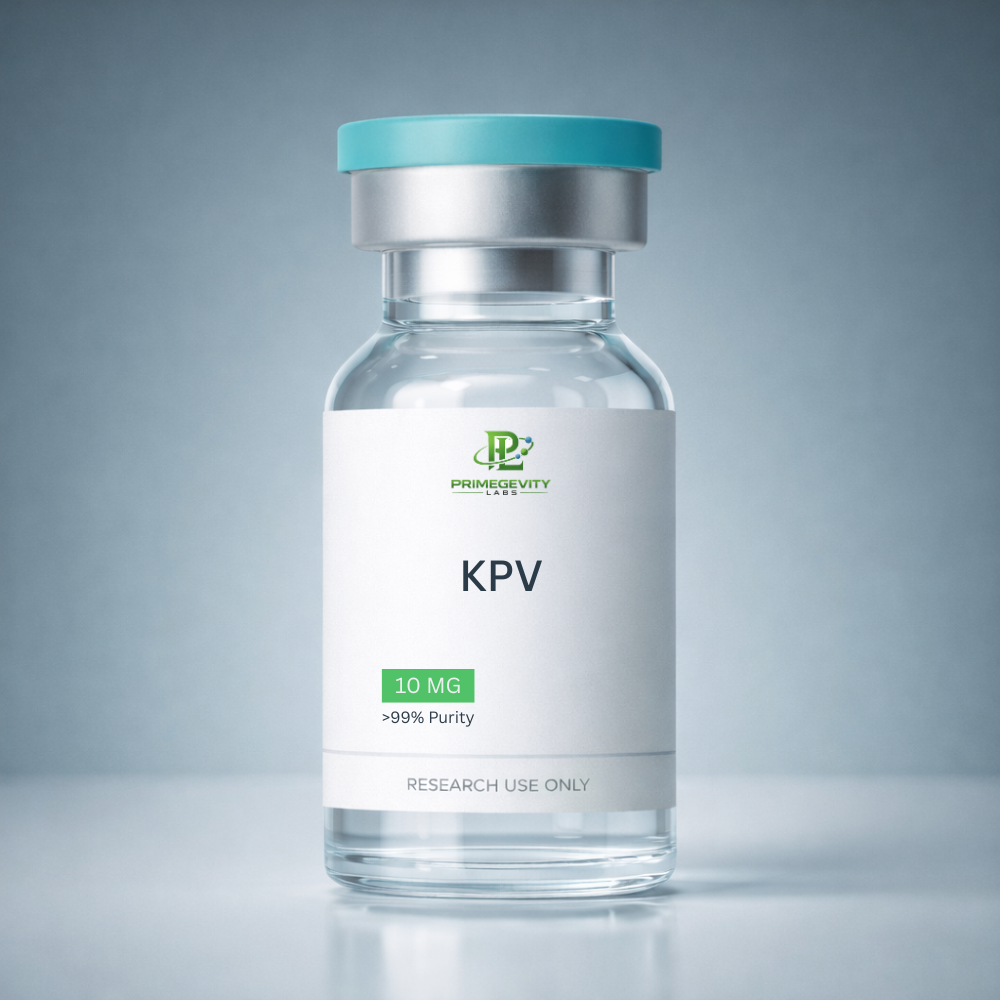
KPV (Lysine-Proline-Valine)
KPV is a synthetic tripeptide consisting of the amino acids lysine, proline, and valine. It is a C-terminal fragment of alpha-melanocyte-stimulating hormone (α-MSH), a naturally occurring peptide with significant anti-inflammatory, antimicrobial, and wound-healing properties. Unlike full-length α-MSH, KPV retains potent immune-modulating activity while lacking the melanotropic effects associated with pigmentation.
In controlled laboratory settings, KPV is widely utilized to investigate NF-κB signaling, cytokine regulation, and epithelial barrier integrity, particularly in models of gastrointestinal and dermatological inflammation.
Key Features & Research Utility
-
Synthetic anti-inflammatory tripeptide derived from the α-MSH hormone fragment.
-
Highly relevant to NF-κB inhibition and pro-inflammatory cytokine modulation.
-
Supports investigation of antimicrobial activity against common pathogens like S. aureus and C. albicans.
-
Commonly applied in Inflammatory Bowel Disease (IBD), dermatitis, and wound-healing research models.
-
Suitable for in vitro assays and in vivo preclinical studies involving PepT1 transporter uptake.
Biochemical Profile
| Property | Description |
| Compound Name | KPV (Lysine-Proline-Valine) |
| Peptide Class | Synthetic α-MSH fragment |
| Amino Acid Sequence | Lys-Pro-Val |
| Molecular Formula | $C_{16}H_{30}N_4O_4$ |
| Molecular Weight | ~342.44 g/mol |
| CAS Number | 67727-97-3 |
| PubChem CID | 125672 |
Mechanistic & Pathway Context
KPV exerts its primary biological effects by inactivating central inflammatory pathways within cells. Its mechanism of action is frequently assessed through:
-
NF-κB inhibition assays, which measure the suppression of genes that induce inflammatory T-cell activation.
-
Cytokine modulation profiling, specifically focusing on the downregulation of TNF-α, IL-1β, and other pro-inflammatory mediators.
-
PepT1-mediated transport studies, examining how the peptide is actively internalized by intestinal epithelial cells.
-
Antimicrobial viability assays, assessing the peptide’s ability to disrupt pathogen membranes without suppressing overall immune function.
Research Applications
| Application Area | Experimental Focus |
| Gastrointestinal Research | Intestinal barrier function, colitis-associated inflammation, and PepT1 uptake. |
| Dermatological Studies | Wound-healing dynamics, eczema/psoriasis models, and transdermal delivery. |
| Immunology | Cytokine regulation, macrophage response reduction, and NF-κB signaling. |
| Microbiology | Antimicrobial efficacy against bacterial and fungal pathogens. |
| Metabolic Research | Inflammation-driven metabolic disorders and oxidative stress mitigation. |
Preclinical Research Overview
KPV has been extensively incorporated into preclinical experimental models, particularly murine models of colitis and inflammatory bowel disease, to characterize its ability to restore intestinal tissue architecture and barrier function. Researchers frequently use KPV to study the intersection of melanocortin signaling and immune response without the confounding variable of skin pigmentation.
Additional investigations utilize nanoparticle-based delivery systems to improve the peptide’s stability and target specific inflamed tissues, further probing its potential in chronic inflammatory paradigms.
Form & Analytical Verification
KPV is supplied as a synthetic research peptide (often as a lyophilized powder) suitable for controlled laboratory workflows. Standard quality-control procedures typically include:
-
High-performance liquid chromatography (HPLC) for purity assessment.
-
Mass spectrometry (MS) for identity confirmation.
-
Batch documentation to support reproducibility in RUO study designs.
Disclaimer
-
This product is sold For Research Use Only (RUO).
-
Not for human or animal consumption.
-
Not approved for diagnostic, therapeutic, medical, or veterinary use.
Important Legal & Educational Notice
This document is provided solely for general educational and informational purposes. It does NOT provide medical advice, legal advice, dosing guidance, treatment instructions, or recommendations of any kind. Nothing in this document recommends, suggests, instructs, or endorses the use of any peptide, compound, injection technique, dosage, timing, frequency, or anatomical site. All information must be independently verified with a licensed medical professional. This document is intended to comply with applicable laws and regulations of the State of California.
| Size |
|---|
Be the first to review “KPV (Lysine-Proline-Valine)” Cancel reply
Related Products
Related products
-
Wolverine
$100.00 – $175.00Price range: $100.00 through $175.00 Add to Cart Add to Cart This product has multiple variants. The options may be chosen on the product page -
BPC-157 (Body Protection Compound-157)
$100.00 Add to Cart Add to Cart This product has multiple variants. The options may be chosen on the product page -
GLOW
$160.00 Add to Cart Add to Cart This product has multiple variants. The options may be chosen on the product page -
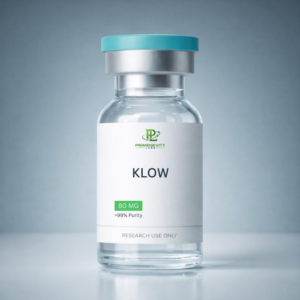
KLOW
$200.00 Add to Cart Add to Cart This product has multiple variants. The options may be chosen on the product page
[wp_corner_popup]
Reviews
There are no reviews yet.